The meaning of spider lilies extends far beyond their delicate, spider-like blooms. These striking flowers, with their long, slender petals and captivating fragrance, have captivated cultures worldwide for centuries. From their symbolic significance in ancient folklore to their modern-day presence in gardens and art, spider lilies hold a rich and multifaceted history, imbued with layers of meaning and interpretation.
This exploration delves into the fascinating world of spider lilies, uncovering their botanical characteristics, cultural symbolism, historical references, and horticultural practices. We’ll journey through diverse interpretations of these captivating flowers, examining their significance across cultures and uncovering the stories they tell.
Botanical Characteristics
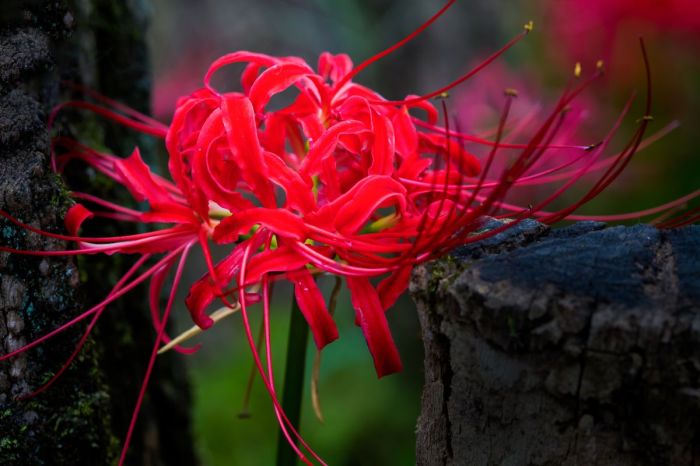
Spider lilies, scientifically known asLycoris radiata*, are captivating plants renowned for their unique and striking appearance. These plants are not true lilies, belonging to the Amaryllis family, but they share some characteristics with lilies.
Physical Features
Spider lilies are characterized by their distinctive foliage and vibrant flowers. The leaves, which are strap-shaped and resemble those of a true lily, emerge from the bulb in the autumn, growing to a length of 12-18 inches. They are typically green, but some varieties may have a purplish hue.
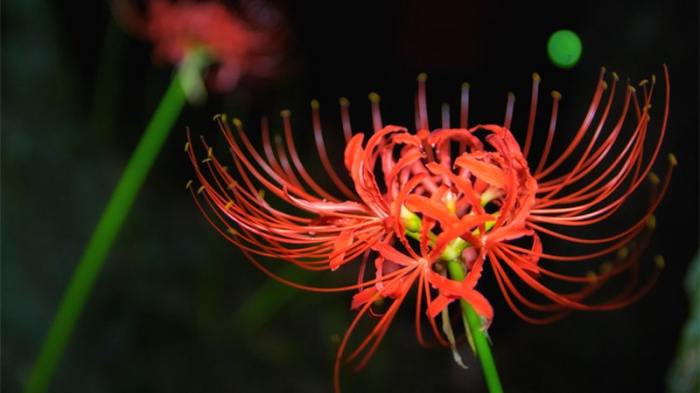
The flowers, which appear in late summer or early autumn, are the most prominent feature of the plant. They are clustered at the top of a tall, leafless stem that can reach heights of 1-2 feet. The flowers are trumpet-shaped, with six narrow, twisted petals that radiate outwards, giving the plant its name.
The petals are typically red, but there are also varieties with pink, white, or yellow flowers. The flowers are often described as having a spider-like appearance, hence the common name.
Distinctive Characteristics
Spider lilies are distinguished from other types of lilies by their unique growth habit and the timing of their flowering. Unlike most lilies, spider lilies produce their leaves and flowers at different times of the year. The leaves emerge in the autumn, and the flowers appear in late summer or early autumn, after the leaves have died back.
This unusual growth pattern is a result of the plant’s adaptation to its native environment.
Find advice related to main character of jujutsu kaisen that can be useful for you today.
Growth Habits and Preferred Conditions
Spider lilies are hardy plants that can tolerate a wide range of growing conditions. They prefer well-drained soil and full sun to partial shade. However, they can also thrive in slightly shaded areas, especially in hot climates. The bulbs are dormant during the summer months, and they should be planted in the fall after the soil has cooled.
Spider lilies are relatively easy to care for and can be propagated by dividing the bulbs. They are also relatively pest-free and disease-resistant.
Symbolism and Meaning

Spider lilies, with their striking appearance and unique characteristics, have been woven into the fabric of human culture, carrying a diverse range of symbolic meanings across various regions and traditions. Their symbolism often reflects the complex interplay between life and death, purity and renewal, and the enduring power of nature.
Cultural Significance
Spider lilies hold profound cultural significance in different parts of the world, where they are often associated with specific beliefs, rituals, and folklore.
Gain direct insights about the benefits of tokyo revengers season 4 through case studies.
- In East Asia, particularly in Japan, China, and Korea, the spider lily is often associated with death and remembrance. This association stems from the plant’s blooming season, which coincides with the Obon festivalin Japan and the Ghost Festivalin China, both of which are dedicated to honoring ancestors and remembering the departed.
- In Japan, the spider lily, known as higanbana, is also linked to rebirth and the cycle of life and death. The plant’s vibrant red color is often seen as symbolizing passion and sacrifice, while its trumpet-shaped flowers are reminiscent of the trumpet of the afterlife.
- In China, the spider lily is known as manju shahuaand is associated with regret and lost memories. It is believed that the flower blooms in the underworld, and its fragrance can induce amnesiain those who smell it.
Symbolic Meanings
The symbolic meanings associated with spider lilies are often multifaceted and can vary depending on the context and cultural interpretation.
Do not miss the opportunity to learn more about the context of is gojo dead.
- Death and Remembrance:As mentioned earlier, the spider lily is often associated with death in East Asian cultures. This association stems from the plant’s blooming season, which coincides with festivals dedicated to honoring ancestors and remembering the departed.
- Rebirth and Renewal:In some cultures, the spider lily is also seen as a symbol of rebirth and renewal. This interpretation is likely linked to the plant’s ability to grow in challenging conditions and its vibrant, striking appearance.
- Purity and Innocence:The spider lily’s white color is often associated with purity and innocence, particularly in Western cultures. This association is likely rooted in the flower’s delicate beauty and its association with light and hope.
- Passion and Sacrifice:In Japan, the spider lily’s vibrant red color is often seen as symbolizing passion and sacrifice. This association is likely linked to the flower’s association with the trumpet of the afterlife, which is often associated with the act of sacrificing oneself for a greater cause.
Cultural Comparisons
The interpretations of spider lilies across different cultures highlight the diverse ways in which humans engage with nature and imbue it with meaning.
- While the spider lily is often associated with death in East Asia, it is not always seen as a negative symbol. In some cultures, the flower is seen as a reminder of the impermanence of life and the importance of cherishing the present moment.
- In contrast to the East Asian interpretations, the spider lily is often seen as a symbol of purity and innocence in Western cultures. This difference in interpretation highlights the diverse ways in which cultural beliefs and values shape our understanding of nature.
Historical and Literary References: Meaning Of Spider Lilies
The spider lily’s captivating beauty and unique symbolism have captured the imagination of people across cultures for centuries, weaving its way into art, literature, and mythology. From ancient folklore to modern literature, the spider lily’s presence has enriched stories and inspired artists, making it a prominent figure in the tapestry of human creativity.
Spider Lilies in Ancient Japanese Art and Literature
The spider lily holds a significant place in Japanese art and literature, often symbolizing death, rebirth, and the ephemeral nature of life. Its presence in these cultural forms reflects the profound impact the flower has had on Japanese society.
- The spider lily is frequently depicted in Japanese woodblock prints, a prominent art form during the Edo period (1603-1868). Artists like Utagawa Hiroshige and Katsushika Hokusai incorporated the spider lily into their works, often depicting it in landscapes, alongside other symbolic elements like bridges and water, further enhancing the flower’s evocative symbolism.
- In Japanese literature, the spider lily appears in numerous poems, stories, and plays. The flower’s symbolic significance is often explored in these works, reflecting the complex emotions associated with death and rebirth. For instance, the spider lily is frequently mentioned in Japanese haiku, a form of poetry that emphasizes brevity and imagery, capturing the essence of the flower’s ephemeral beauty.
- The spider lily also plays a role in Japanese folklore, where it is associated with the spirit world and the realm of the dead. In some legends, the flower is said to bloom near graves, signifying the connection between the living and the departed.
Spider Lilies in Chinese Literature and Art, Meaning of spider lilies
The spider lily has also made its mark in Chinese culture, where it holds a unique symbolism that reflects the flower’s beauty and its association with the cycle of life and death.
- In Chinese poetry, the spider lily is often used as a metaphor for the fleeting nature of life and the inevitability of death. The flower’s delicate beauty and short lifespan serve as a reminder of the transient nature of human existence.
- The spider lily also features prominently in Chinese paintings, where it is often depicted alongside other symbolic elements like rocks, water, and birds, creating a sense of serenity and contemplation.
- In Chinese mythology, the spider lily is associated with the legend of the “Moon Palace,” a celestial abode where the moon goddess Chang’e resides. The spider lily is said to bloom in the Moon Palace, symbolizing the beauty and purity of the celestial realm.
Spider Lilies in Western Literature
While the spider lily is not as widely known in Western cultures as it is in Asia, it has still made its way into literature and art, albeit in a more limited capacity.
- In Western literature, the spider lily is often used as a symbol of death and mourning. Its presence in these works can be seen as a reflection of the flower’s association with the cycle of life and death in other cultures.
For example, in Edgar Allan Poe’s poem “The Raven,” the speaker describes the raven’s eyes as “like the gleam in the eyes of a dying man.” This imagery evokes the association of the spider lily with death and decay.
- In art, the spider lily has been depicted in paintings and sculptures, often as a symbol of the fleeting nature of life and the beauty of decay. The flower’s delicate beauty and short lifespan make it a fitting subject for artists exploring themes of mortality and the passage of time.
Spider Lilies in Horticulture
Spider lilies are popular ornamental plants that add a touch of elegance and drama to gardens and landscapes. They are relatively easy to grow and care for, making them a good choice for both experienced and novice gardeners. This section will explore the horticultural aspects of spider lilies, covering their cultivation, propagation, and management of pests and diseases.
Growing and Caring for Spider Lilies
Spider lilies thrive in warm climates and prefer well-drained soil. They are generally adaptable to various soil types, but they perform best in sandy or loamy soils. The optimal pH range for spider lilies is between 6.0 and 7.0. Spider lilies require full sun to partial shade, with at least six hours of sunlight per day.
They are drought-tolerant plants but benefit from regular watering, especially during the growing season. Overwatering can lead to root rot, so it is important to allow the soil to dry out slightly between waterings. Fertilizing spider lilies during the growing season can promote healthy growth and flowering.
A balanced fertilizer, applied every few weeks, is recommended.
Propagation of Spider Lilies
Spider lilies can be propagated through division or by planting bulbs.
Division
Division is a simple and effective method of propagating spider lilies. It involves separating the clumps of bulbs from the mother plant. The best time to divide spider lilies is in the fall or early spring, after the foliage has died back.
- Dig up the clump of bulbs carefully, ensuring not to damage the roots.
- Use a sharp knife or garden trowel to separate the bulbs into individual units, each with a healthy root system.
- Replant the divided bulbs in a well-prepared bed, spacing them approximately 12 inches apart.
- Water the newly planted bulbs thoroughly.
Bulbs
Spider lilies can also be propagated by planting bulbs.
- Choose healthy bulbs that are firm and free of damage.
- Plant the bulbs in well-drained soil, with the pointed end facing upwards.
- Space the bulbs approximately 6 inches apart.
- Water the bulbs thoroughly after planting.
Pest and Disease Management
Spider lilies are generally resistant to pests and diseases, but they can be susceptible to certain problems.
Pests
Common pests that can affect spider lilies include aphids, spider mites, and mealybugs.
- Aphids are small, soft-bodied insects that feed on plant sap. They can cause leaf curl and discoloration.
- Spider mites are tiny, eight-legged creatures that spin webs on the underside of leaves. They can cause yellowing and stippling of leaves.
- Mealybugs are small, white, oval-shaped insects that feed on plant sap. They can cause leaf distortion and wilting.
Diseases
Spider lilies can be affected by diseases such as fungal leaf spot, root rot, and bulb rot.
- Fungal leaf spot is a common disease that causes brown or black spots on leaves. It can be controlled by removing infected leaves and avoiding overwatering.
- Root rot is a serious disease that can kill spider lilies. It is caused by excess moisture and poor drainage. To prevent root rot, ensure that the soil is well-drained and avoid overwatering.
- Bulb rot is a disease that affects the bulbs of spider lilies. It can be caused by fungal or bacterial infections. Infected bulbs should be discarded.
As we’ve explored the world of spider lilies, we’ve discovered that these delicate blooms hold a powerful and multifaceted meaning. From their symbolism of rebirth and purity to their representation of death and mourning, spider lilies offer a unique window into human culture and the enduring power of nature.
Their presence in art, literature, and folklore continues to inspire and captivate, reminding us of the enduring beauty and complexity of the natural world.
Quick FAQs
Are spider lilies poisonous?
Spider lilies are not considered poisonous to humans, but their bulbs can be toxic to pets. It’s best to keep them out of reach of animals.
What is the best time to plant spider lily bulbs?
The best time to plant spider lily bulbs is in the fall, after the threat of frost has passed.
What are some common spider lily pests?
Spider lilies are susceptible to aphids, mealybugs, and spider mites. These pests can be controlled with insecticidal soap or neem oil.
