One Piece Live Action Cast is a topic that has sparked intense discussions among fans, with the upcoming Netflix adaptation bringing the beloved manga and anime to life on screen. The casting choices have been a major point of contention, with fans eagerly debating the suitability of each actor and the potential for their portrayal to capture the essence of their respective characters.
The live-action series presents a unique challenge, requiring a careful balance between staying true to the source material and adapting the unique visual style and character designs for a new audience.
From the iconic Straw Hat Pirates to the colorful world of One Piece, the live-action adaptation faces a formidable task in capturing the essence of the beloved franchise. This article delves into the casting choices, character adaptations, fan reactions, production details, and the potential impact of the series, offering insights into the challenges and opportunities presented by this ambitious undertaking.
Casting Choices
The casting of the One Piece live-action series has been a hot topic of discussion among fans, with both excitement and skepticism surrounding the choices made. While some actors have been praised for their resemblance to their characters, others have faced criticism for their perceived lack of fit.
Find out how gojo satoru death has changed ways in this topic.
This section will delve into the casting decisions for the main characters, exploring both the positive and negative aspects of each choice.
Physical Appearance and Personality
The physical resemblance of the actors to their anime/manga counterparts has been a major point of contention. Some actors, like Iñaki Godoy as Monkey D. Luffy, have been praised for their striking resemblance to the Straw Hat captain. His youthful energy and carefree spirit seem to perfectly capture Luffy’s personality.
Conversely, other actors, such as Mackenyu as Roronoa Zoro, have faced criticism for their physical appearance. Zoro’s iconic green hair and three-sword style have been a source of debate, with some fans finding the actor’s portrayal lacking.
- Luffy: Iñaki Godoy’s youthful energy and carefree spirit capture Luffy’s personality well. He bears a striking resemblance to Luffy’s appearance, especially with his rubbery, flexible body.
- Zoro: Mackenyu’s portrayal of Zoro has been met with mixed reactions. While some fans appreciate his serious demeanor and fighting skills, others find his physical appearance lacking in resemblance to the anime/manga character.
- Nami: Emily Rudd’s portrayal of Nami has been praised for her striking resemblance to the anime/manga character, especially her fiery red hair and confident demeanor.
- Usopp: Jacob Romero Gibson’s portrayal of Usopp has been met with mixed reactions. While some fans appreciate his comedic timing and physical resemblance to the character, others find his portrayal lacking in Usopp’s signature nervousness and cowardice.
- Sanji: Taz Skylar’s portrayal of Sanji has been praised for his resemblance to the anime/manga character, especially his blonde hair and charming personality.
Previous Roles and Suitability
The actors’ previous roles and experience have also been a factor in their casting. Some actors, like Iñaki Godoy, have limited experience, while others, like Mackenyu, have established careers in the film industry. This has led to speculation about their ability to portray their respective characters effectively.
- Luffy: Iñaki Godoy’s previous roles have been mostly in telenovelas, suggesting a potential lack of experience in action-heavy productions. However, his youthful energy and comedic timing suggest a possible fit for Luffy’s personality.
- Zoro: Mackenyu’s previous roles in action films like “Rurouni Kenshin” suggest he has the physicality and combat skills necessary for portraying Zoro.
- Nami: Emily Rudd’s previous roles in horror films and TV series suggest a potential for portraying Nami’s confident and independent nature.
- Usopp: Jacob Romero Gibson’s previous roles in comedy and drama suggest a potential for portraying Usopp’s comedic timing and emotional depth.
- Sanji: Taz Skylar’s previous roles in action films and TV series suggest a potential for portraying Sanji’s suave and charming personality.
Character Adaptations
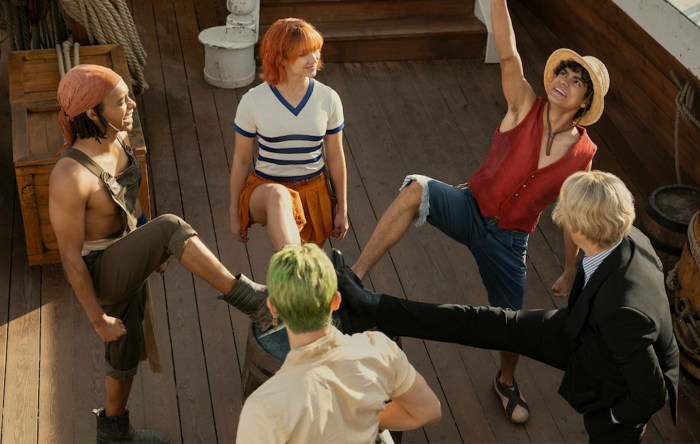
The live-action One Piece series faces the challenge of adapting beloved characters from the vibrant world of anime and manga to a more realistic setting. This involves careful consideration of their personalities, appearances, and backstories, ensuring that their essence is preserved while navigating the limitations of live-action.
The adaptation process involves balancing faithfulness to the source material with the need for creative interpretation to make the characters relatable and engaging for a wider audience. This is especially important considering the unique visual style and character designs of the anime and manga, which often feature exaggerated features and vibrant colors.
Challenges of Translating Visual Style
The distinct visual style of One Piece presents a significant challenge for the live-action adaptation. The anime’s exaggerated proportions, vibrant colors, and fantastical designs are deeply ingrained in the series’ identity. Translating these elements to a realistic setting requires a careful balance of maintaining the spirit of the characters while adapting their appearance to fit the live-action aesthetic.
- Character Proportions:The exaggerated proportions of One Piece characters, such as Luffy’s long limbs and Sanji’s tall frame, are iconic features that contribute to their unique visual appeal. However, replicating these proportions in live-action would likely appear unnatural and even comical.
The adaptation team must find a way to retain the essence of these proportions while adapting them to a more realistic aesthetic.
- Costume Design:The colorful and intricate costumes of One Piece characters are integral to their visual identity. Translating these designs into live-action costumes requires careful consideration of practicality, functionality, and the overall visual tone of the series. The adaptation team must find a balance between staying true to the original designs and adapting them to fit the live-action world.
- Special Effects:The fantastical elements of One Piece, such as Devil Fruit powers and the vast world of the Grand Line, rely heavily on special effects. The live-action adaptation must find a way to create these effects in a convincing and visually engaging way, without overwhelming the realism of the setting.
Potential Changes and Omissions, One piece live action cast
Adapting a complex and expansive story like One Piece for live-action inevitably involves some changes and omissions. The adaptation team must prioritize the core elements of the story and characters while making decisions about which aspects to emphasize or de-emphasize.
- Character Backstories:Some characters’ backstories may be condensed or altered to fit the pacing of the live-action series. This could potentially impact the characters’ development and their relationships with others. For example, the complex backstory of Sanji, involving his family’s legacy and his past as a chef, may be simplified in the adaptation.
- Character Relationships:The relationships between characters may be modified or adjusted to better fit the live-action format. For instance, the dynamic between Luffy and Zoro, which is often characterized by playful rivalry and mutual respect, may be subtly adjusted in the adaptation to better suit the pacing and tone of the live-action series.
- Plot Points:Certain plot points or events may be omitted or rearranged to streamline the narrative. This could potentially impact the overall arc of the story and the characters’ journeys. For example, the adaptation may choose to condense or omit certain arcs, such as the Skypiea arc, to maintain the pacing of the series.
You can investigate in detail about solo levelling season 2 to expand your insight in the area of solo levelling season 2.
Fan Reactions
The announcement of the live-action One Piece adaptation, and the subsequent release of the first trailer, generated a significant wave of reactions from fans worldwide. These reactions ranged from fervent enthusiasm to cautious skepticism, reflecting the complex emotions associated with adapting a beloved and long-running anime franchise.
Analysis of Fan Reactions
Fan reactions to the One Piece live-action adaptation were multifaceted, driven by a combination of factors, including casting choices, character adaptations, and overall expectations.
Positive Reactions
- Casting Choices:Many fans expressed positive sentiments regarding the casting choices, particularly praising the selection of actors who physically resembled their animated counterparts. The casting of Iñaki Godoy as Monkey D. Luffy, for instance, was widely appreciated for its accuracy in capturing Luffy’s energetic and rubbery physique.
Do not miss the opportunity to learn more about the context of when does the new call of duty come out.
- Visual Fidelity:The first trailer showcased a strong commitment to visual fidelity, with sets, costumes, and special effects that closely mirrored the anime’s signature style. This visual faithfulness resonated with fans who valued the visual aesthetics of the original source material.
- Potential for Success:Many fans expressed optimism about the adaptation’s potential to introduce the One Piece universe to a wider audience, particularly those unfamiliar with the anime. They hoped that the live-action series would capture the essence of the original story and introduce its themes of friendship, adventure, and overcoming challenges to a new generation.
Negative Reactions
- Character Adaptations:Concerns arose regarding the adaptation of certain characters and their personalities. Some fans worried that the live-action portrayal might deviate too far from the original source material, particularly in terms of character dynamics and comedic timing. For example, the portrayal of Sanji’s gentlemanly demeanor and his unique relationship with women was a source of apprehension for some fans.
- Live-Action Adaptation Challenges:There was a general sense of skepticism regarding the feasibility of adapting a complex and long-running anime like One Piece into a live-action format. Some fans expressed concerns about the ability to translate the anime’s signature humor, action sequences, and world-building into a live-action setting.
- Expectations:The high expectations associated with adapting a beloved and iconic franchise like One Piece contributed to the negativity surrounding the adaptation. Some fans felt that the live-action series would inevitably fall short of their expectations, leading to a sense of disappointment.
Fan Group Reactions
| Fan Group | Positive Reactions | Negative Reactions |
|---|---|---|
| Long-time Fans | Appreciation for visual fidelity, accurate casting choices, potential to introduce the franchise to new audiences. | Concerns about character adaptations, skepticism regarding live-action format, high expectations. |
| Casual Viewers | Intrigued by the premise and visuals, potential for a new and exciting adventure. | Unfamiliarity with the source material, concerns about the adaptation’s complexity. |
| Newcomers | Excited to discover a new world and characters, potential for a fun and engaging series. | Uncertainty about the series’ quality and potential for success. |
Production and Visuals

The live-action adaptation of One Piece faced the monumental task of translating the vibrant and fantastical world of the anime and manga into a tangible reality. This required a meticulous production process that encompassed diverse filming locations, elaborate costumes, and cutting-edge special effects.
Filming Locations
The production team sought locations that could authentically capture the diverse environments of the One Piece world.
- The bustling city of Cape Town, South Africa, served as the backdrop for the vibrant and chaotic city of Loguetown, a key location in the early arcs of the story.
- The scenic landscapes of South Africa, including its coastlines and deserts, provided the perfect setting for various iconic locations, such as the Grand Line, the Alabasta Kingdom, and the mysterious Skypiea.
- The production team also ventured to other locations, such as Spain and Croatia, to capture the essence of various environments, ensuring a diverse and visually captivating experience for viewers.
Costumes
The costumes were a critical aspect of bringing the characters to life, and the production team paid meticulous attention to detail, ensuring they were faithful to the source material while adapting them for a live-action setting.
- The iconic straw hats worn by the Straw Hat Pirates were meticulously crafted, capturing the distinctive features of each member’s hat, such as Luffy’s signature straw hat with a single, drooping ribbon.
- The costumes reflected the personalities and backgrounds of the characters, with Luffy’s signature red shorts and vest symbolizing his adventurous spirit, while Zoro’s green bandana and kendo uniform emphasized his stoic and skilled nature.
- The production team collaborated with costume designers to create elaborate and detailed costumes for the villains, such as the intricate and menacing attire of the Baroque Works agents, showcasing their power and ambition.
Special Effects
Recreating the fantastical elements of One Piece required innovative and cutting-edge special effects.
- The series utilized computer-generated imagery (CGI) to bring to life the iconic Devil Fruit powers, such as Luffy’s rubber-like body and Zoro’s three-sword style, creating visually impressive and dynamic action sequences.
- The production team employed practical effects alongside CGI, creating a seamless blend of both techniques to bring the world of One Piece to life. For instance, the use of practical props and sets combined with CGI allowed for the creation of realistic and awe-inspiring environments, such as the colossal seafaring vessels and the towering buildings of the Grand Line.
- The special effects team meticulously recreated the signature attacks and abilities of the characters, ensuring they were visually striking and true to the source material. For example, Luffy’s signature Gum-Gum Pistol and Gum-Gum Gatling were brought to life with a combination of practical effects and CGI, creating dynamic and impactful action sequences.
Visual Style
The visual style of the live-action series aimed to capture the essence of the anime and manga while adapting it for a live-action setting.
- The series retained the vibrant color palette and dynamic animation style of the anime, using vivid colors and bold contrasts to create a visually striking and engaging experience.
- The production team embraced the fantastical elements of the source material, incorporating elements of realism and exaggeration to create a unique and immersive visual style. For example, the costumes, sets, and special effects were designed to reflect the exaggerated proportions and vibrant colors of the anime and manga, while also maintaining a sense of realism.
- The series incorporated elements of live-action filmmaking, such as camera angles and editing techniques, to create a cinematic and immersive experience for viewers. This included using dynamic camera movements and creative editing techniques to capture the energy and excitement of the source material.
Challenges of Recreating Iconic Settings and Environments
Translating the iconic settings and environments of One Piece into a live-action setting presented numerous challenges for the production team.
- One of the biggest challenges was recreating the vast and diverse landscapes of the Grand Line, including the towering mountains, lush forests, and treacherous seas. The production team had to utilize a combination of practical locations, CGI, and creative set design to bring these iconic environments to life.
- The production team also faced the challenge of capturing the whimsical and fantastical elements of the One Piece world, such as the fantastical creatures and the magical powers of the Devil Fruits. They had to find ways to translate these elements into a realistic setting while maintaining their essence and appeal.
- The series also had to contend with the challenge of recreating the iconic architecture and cities of the One Piece world, such as the bustling city of Loguetown and the grand capital of Alabasta. The production team had to carefully consider the scale and detail of these locations, ensuring they were both visually impressive and true to the source material.
Impact and Expectations: One Piece Live Action Cast
The live-action adaptation of One Piece has the potential to significantly impact the franchise, both by attracting new viewers and by further solidifying its position as a global phenomenon. The series has already garnered significant attention, with fans eagerly anticipating its release and the potential for it to introduce the world of One Piece to a wider audience.
Expectations for the Series
The expectations for the live-action series are high, both from fans and from the production team. Fans are hoping for a faithful adaptation that captures the spirit and essence of the original anime and manga, while the production team is aiming to deliver a high-quality series that will appeal to both existing fans and new viewers.
Fan Expectations
- Faithful Adaptation:Fans are hoping for a faithful adaptation of the source material, with accurate character portrayals, plot points, and themes. They want to see the world of One Piece brought to life in a way that honors the original work.
- High Production Quality:Fans expect the series to be produced with high production value, with impressive visual effects, costumes, and set design. They want to see the world of One Piece brought to life in a way that is both visually stunning and immersive.
- Respect for the Source Material:Fans are hoping that the series will respect the source material and avoid making significant changes to the story or characters. They want to see a series that is true to the spirit of One Piece.
Production Team Expectations
- Global Appeal:The production team is aiming to create a series that will appeal to a global audience, not just fans of the anime and manga. They want to make a series that is both entertaining and accessible to viewers who are unfamiliar with One Piece.
- Long-Term Success:The production team is hoping to create a long-running series that will continue to entertain viewers for years to come. They want to build a franchise that will rival the success of the original anime and manga.
- Critical Acclaim:The production team is aiming for critical acclaim for the series, both for its acting, direction, and writing. They want to create a series that is considered to be a high-quality adaptation of the source material.
Personal Predictions
The live-action One Piece series has the potential to be a massive success, especially given the franchise’s global popularity. The series has the potential to attract new viewers and further solidify the franchise’s position as a global phenomenon. The success of the series will depend on several factors, including the quality of the adaptation, the casting choices, and the overall production value.
However, if the series is able to deliver on its promises and capture the spirit of the original anime and manga, it has the potential to be a huge hit.
“The live-action One Piece series has the potential to be a massive success, especially given the franchise’s global popularity. The series has the potential to attract new viewers and further solidify the franchise’s position as a global phenomenon.”
The One Piece Live Action Cast presents a captivating blend of anticipation and uncertainty. The series has the potential to introduce a new generation to the world of One Piece while also satisfying longtime fans who have grown attached to the anime and manga.
As the production progresses and more information is released, it will be fascinating to observe how the cast and crew navigate the challenges of adapting such a beloved and complex franchise for a live-action audience. The success of the series hinges on its ability to capture the heart and soul of One Piece while remaining accessible and engaging for viewers of all backgrounds.
FAQ Insights
What are the biggest challenges of adapting One Piece for live-action?
Adapting the unique visual style and character designs of One Piece for live-action is a major challenge. The anime and manga feature exaggerated features, vibrant colors, and fantastical creatures that can be difficult to translate to a realistic setting. The production team must find ways to create a visually compelling world that stays true to the spirit of One Piece while still being believable and engaging for a live-action audience.
What are the expectations for the One Piece live-action series?
Fans have high expectations for the One Piece live-action series, hoping for a faithful adaptation that captures the essence of the beloved franchise. The production team is facing pressure to deliver a series that meets these expectations while also attracting new viewers who are unfamiliar with the source material.
