Red spider lily meaning takes center stage, weaving a tale of beauty and mystery. This captivating flower, with its vibrant crimson blooms and delicate, spider-like petals, has long held a place of significance in various cultures. From ancient folklore to modern art, the red spider lily’s symbolism continues to fascinate and intrigue.
The red spider lily, scientifically known as Lycoris radiata, is a striking plant with unique characteristics. Its vibrant crimson flowers bloom in clusters, often appearing before the leaves emerge, creating a dramatic visual spectacle. This flower thrives in warm climates and is native to East Asia, where it has been cultivated for centuries.
The Red Spider Lily
The red spider lily, with its striking crimson blooms and unique growth habit, has captivated imaginations for centuries. Its beauty and mysterious nature have made it a prominent figure in folklore, art, and literature, particularly in East Asian cultures. This article delves into the captivating world of the red spider lily, exploring its unique characteristics, scientific classification, and cultural significance.
Physical Characteristics
The red spider lily, scientifically known asLycoris radiata*, is a fascinating plant with distinctive physical characteristics. Its most striking feature is its cluster of bright red, spider-like flowers, which emerge directly from the ground without any visible leaves. The flowers are typically 4 to 6 inches in diameter, with long, narrow petals that curl back gracefully, resembling the legs of a spider.
You can feel the advantages of reviewing when will one piece end today.
They are also known for their strong, sweet fragrance, which attracts pollinators. The red spider lily’s leaves, which are long, strap-like, and dark green, emerge after the flowers have faded, creating a striking contrast.
Scientific Classification
The red spider lily belongs to the
-Amaryllidaceae* family, which includes other well-known bulbous plants like daffodils and amaryllis. It is classified as follows
* Kingdom:Plantae
Phylum
See what experts explain about red spider lily meaning and its benefits for the field.
Magnoliophyta
Class
Liliopsida
Order
Asparagales
Family
Amaryllidaceae
Genus
Lycoris*
-
Species
- Lycoris radiata*
Geographical Distribution and Growing Conditions
The red spider lily is native to East Asia, particularly China, Japan, and Korea. It is a naturalized species in other parts of the world, including the southeastern United States. The plant prefers moist, well-drained soil and partial shade. It thrives in warm, humid climates and can tolerate some drought conditions.
Historical and Cultural Significance
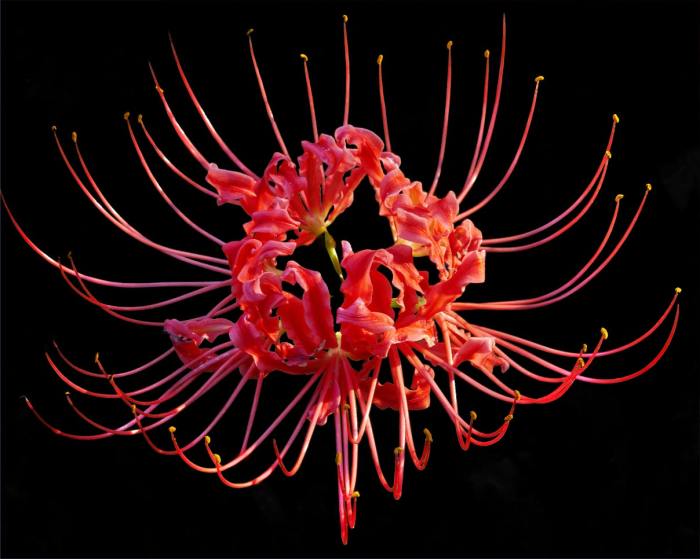
The red spider lily, with its striking beauty and unique symbolism, has captivated cultures across East Asia for centuries. Its presence in art, literature, and folklore reflects a deep-rooted cultural significance, often interwoven with beliefs about life, death, and the afterlife.
Cultural Significance in East Asia, Red spider lily meaning
The red spider lily holds a special place in the cultural landscapes of Japan, China, and Korea, often associated with various aspects of life and death.
- Japan:In Japan, the red spider lily, known as “higanbana,” is closely linked to the autumnal equinox, or “higan,” a time for remembering ancestors and visiting their graves. The vibrant red blooms are often found near cemeteries and are believed to guide the spirits of the departed to the afterlife.
- China:In China, the red spider lily, known as “manju shahua,” is associated with both beauty and misfortune. It is often linked to the legend of a heartbroken woman who transformed into a red spider lily after her lover’s death.
This association reflects the bittersweet nature of love and loss.
- Korea:In Korea, the red spider lily, known as “sangsaenggwol,” is also linked to the afterlife. It is believed to symbolize the ephemeral nature of life and the cycle of rebirth. The flower is often depicted in traditional Korean art and is associated with mourning and remembrance.
Association with Deities and Myths
The red spider lily’s association with specific deities and myths further enhances its cultural significance.
- Japan:In Japanese folklore, the red spider lily is associated with the goddess of the underworld, Izanami. The flower’s vibrant red color is believed to represent the blood of the goddess, who was said to have died in childbirth.
- China:In Chinese mythology, the red spider lily is sometimes linked to the goddess of mercy, Guanyin. The flower’s association with compassion and forgiveness reflects the goddess’s role in offering solace and guidance to those in need.
Depiction in Art, Literature, and Folklore
The red spider lily’s striking beauty and symbolic meaning have inspired artists, writers, and storytellers for centuries.
- Art:In Japanese art, the red spider lily is often depicted in paintings and woodblock prints, often as a symbol of death and the afterlife. The flower’s vibrant red color and delicate form create a visually striking contrast, evoking both beauty and melancholy.
- Literature:The red spider lily is a recurring motif in Japanese literature, often appearing in poems, novels, and plays. The flower’s symbolic meaning adds depth and complexity to the narratives, often reflecting themes of loss, remembrance, and the cycle of life and death.
- Folklore:In Japanese folklore, the red spider lily is associated with several legends and tales. One popular story tells of a woman who transformed into a red spider lily after her lover’s death. This legend underscores the flower’s connection to love, loss, and the enduring power of memory.
Symbolic Meanings and Interpretations: Red Spider Lily Meaning
The red spider lily, with its striking appearance and association with death and rebirth, carries a rich tapestry of symbolic meanings across various cultures. Its symbolism has evolved over time, reflecting different cultural beliefs and interpretations.
Symbolism in Different Cultures
The red spider lily’s symbolism varies significantly across cultures. In Japan, the flower is associated with death, particularly the spirits of the deceased. It is often planted near graves and is considered a symbol of remembrance and farewell. The flower is also linked to the idea of rebirth and the cycle of life and death.
In contrast, in China, the red spider lily symbolizes passion and love. Its vibrant red color is associated with romantic feelings and is often used in wedding decorations.
Comparison with Other Flowers
The red spider lily’s symbolism is often compared to other flowers associated with death and rebirth, such as the chrysanthemum and the lily. While the chrysanthemum is a symbol of mourning and respect for the deceased in many cultures, the red spider lily carries a more complex and nuanced symbolism, often associated with the transition between life and death.
The lily, on the other hand, is a symbol of purity and innocence, representing the soul’s ascent to heaven.
Learn how the integration of smoker one piece live action can strengthen efficiency and work results.
Evolution of Symbolism
The symbolism of the red spider lily has evolved over time, influenced by cultural changes and interpretations. In Japan, for example, the flower was initially associated with the afterlife and the realm of the dead. However, with the rise of Buddhism, the flower’s symbolism shifted to include the idea of rebirth and the cycle of life and death.
Similarly, in China, the red spider lily was initially associated with the underworld and the realm of the dead. However, its symbolism later evolved to include passion and love, reflecting the changing cultural attitudes towards death and the afterlife.
The Red Spider Lily in Modern Culture
The red spider lily’s haunting beauty and rich symbolism have captivated the imaginations of artists, musicians, and writers for centuries. In modern times, its allure continues to resonate, finding expression in various artistic forms and cultural practices.
The Red Spider Lily in Contemporary Art, Music, and Literature
The red spider lily’s captivating beauty and symbolic weight have inspired numerous artistic expressions in contemporary art, music, and literature.
- In visual art, the red spider lily is a popular subject for paintings, sculptures, and photographs. Its striking red blooms against a backdrop of lush green foliage or stark autumn landscapes create captivating compositions. Artists often use the red spider lily to evoke feelings of beauty, fragility, and transience.
- In music, the red spider lily has inspired numerous songs and musical compositions. The flower’s symbolism of death and rebirth often finds expression in mournful melodies or haunting lyrics.
- In literature, the red spider lily is frequently used as a metaphor for death, loss, and the passage of time. It is often featured in poems, novels, and short stories, adding depth and emotional resonance to the narrative.
The Red Spider Lily in Modern-Day Ceremonies and Celebrations
In modern-day Japan, the red spider lily is still associated with the autumn equinox and is often used in ceremonies and celebrations related to the ancestors.
- During the autumn equinox, families visit ancestral graves and offer red spider lilies as a symbol of respect and remembrance.
- The red spider lily is also used in traditional Japanese weddings, where it symbolizes the couple’s commitment to each other and their journey through life together.
The Red Spider Lily in Photography and Visual Art
The red spider lily’s striking appearance and symbolic depth have made it a popular subject for photography and other forms of visual art.
- Photographers often capture the flower’s delicate beauty and vibrant red color against a backdrop of natural landscapes, highlighting its ephemeral nature and contrasting it with the enduring beauty of the natural world.
- The red spider lily’s unique form and texture also make it a popular subject for botanical illustrations and still-life paintings. These works often emphasize the flower’s intricate details and delicate beauty, showcasing its aesthetic appeal.
The Red Spider Lily’s Role in the Natural World

The red spider lily, with its striking appearance and intriguing life cycle, plays a multifaceted role in the natural world. It forms complex relationships with other organisms, contributes to the ecosystem, and holds potential for medicinal applications. Understanding these aspects provides a more comprehensive view of this captivating plant.
Ecological Interactions
The red spider lily’s ecological role extends beyond its visual appeal. It serves as a source of nectar for pollinators, primarily butterflies and moths, contributing to their survival and the pollination of other plants in the surrounding environment. Its bulbous structure, containing stored nutrients, also serves as a food source for small mammals like voles and squirrels, who dig them up for sustenance.
Medicinal Properties and Uses
Traditional medicine practices have long recognized the red spider lily’s potential medicinal properties. In Chinese medicine, it is believed to possess anti-inflammatory and analgesic properties, used to treat conditions like arthritis, pain, and swelling. The plant’s extracts have also been studied for their potential in treating cancer and other diseases.
However, it’s crucial to note that these properties are not fully validated by scientific research and using the plant for medicinal purposes should be done under the guidance of a qualified healthcare professional.
Conservation Concerns
Despite its adaptability and resilience, the red spider lily faces certain conservation concerns. Habitat loss due to urbanization and agricultural expansion poses a significant threat, particularly in areas where the plant thrives naturally. Overharvesting for medicinal purposes and ornamental trade can also deplete wild populations.
Therefore, sustainable practices and conservation efforts are crucial to ensure the continued presence of this unique and fascinating plant in the natural world.
The red spider lily, a captivating bloom steeped in symbolism and cultural significance, continues to resonate across cultures. From its association with ancient deities to its presence in modern art, this flower’s allure endures. Its vibrant crimson petals offer a glimpse into the beauty and mystery that have captivated humans for centuries.
Popular Questions
Where does the red spider lily grow?
The red spider lily is native to East Asia, including Japan, China, and Korea. It thrives in warm climates and is often found in woodlands, meadows, and near water sources.
Is the red spider lily poisonous?
Yes, the red spider lily is considered poisonous, particularly the bulbs. It’s important to handle the plant with caution and keep it out of reach of children and pets.
What is the best time to see red spider lilies in bloom?
Red spider lilies typically bloom in late summer or early autumn, often coinciding with the harvest season in East Asia.
Are red spider lilies used in any traditional medicine?
While the red spider lily is considered poisonous, some traditional medicinal practices in East Asia use its bulbs for certain ailments, but this should only be done under the guidance of a qualified practitioner.
