Bleach thousand year blood war season 3 – Bleach Thousand-Year Blood War Season 3 plunges us deeper into the epic battle between the Soul Society and the Quincy, a conflict that has been brewing for centuries. Following the explosive events of Season 2, where Ichigo and his allies faced overwhelming odds against the formidable Quincy army, Season 3 promises a thrilling continuation of this high-stakes struggle.
The stakes have never been higher as the fate of both worlds hangs in the balance.
This season explores the intricacies of the Quincy’s motivations and the depths of their power, while also delving into the personal journeys of beloved characters like Ichigo, Rukia, and Byakuya. As the lines between good and evil blur, we witness acts of courage, sacrifice, and betrayal, all set against a backdrop of breathtaking animation and a hauntingly beautiful soundtrack.
Bleach Thousand-Year Blood War Season 3
The third season of Bleach: Thousand-Year Blood War marks the climactic culmination of the epic anime adaptation of Tite Kubo’s manga series. Season 3 is anticipated to bring the conflict between the Soul Society and the Quincy to a thrilling conclusion, delivering a satisfying resolution to years of anticipation.
The Events Leading to Season 3
Season 2 concluded with the Soul Society reeling from the Quincy’s relentless assault. The Sternritter, led by the formidable Yhwach, had successfully infiltrated the Soul Society and inflicted significant damage, leaving the Shinigami on the defensive. The season ended with the revelation of the true nature of Yhwach’s power and his plans for the Soul Society.
The Central Conflict: Soul Society vs. Quincy
The conflict between the Soul Society and the Quincy is rooted in a long-standing rivalry and differing ideologies. The Soul Society, comprised of Shinigami, is tasked with protecting the human world from Hollows and guiding souls to the afterlife. The Quincy, on the other hand, are a race of humans with the ability to absorb and manipulate spiritual energy, known as Reishi.
They believe that Hollows are a natural part of the spiritual world and that the Shinigami are interfering with the natural order. The Thousand-Year Blood War arc, upon which the anime series is based, revolves around the Quincy’s quest to eliminate the Shinigami and establish their own dominion over the spiritual world.
The Quincy, led by Yhwach, believe that the Shinigami have become corrupted and are no longer fulfilling their purpose. They see themselves as the true guardians of the spiritual world, and their goal is to cleanse it of the Shinigami’s influence.
Explore the advantages of using one piece live action cast in your business strategies.
The conflict between the Soul Society and the Quincy is a clash of ideologies and power. It represents a struggle for control over the spiritual world and the very nature of existence. The outcome of this conflict will have far-reaching consequences for both the human and spiritual realms.
Key Characters and Their Roles
Season 3 of Bleach: Thousand-Year Blood War introduces a host of new characters, while also delving deeper into the motivations and complexities of existing ones. The season’s narrative revolves around the escalating conflict between the Soul Reapers and the Quincy, with each side drawing upon its own unique set of powers and abilities.
New Characters and Their Motivations, Bleach thousand year blood war season 3
The introduction of new characters significantly impacts the dynamics of the conflict between the Soul Reapers and the Quincy. These characters bring fresh perspectives and motivations to the narrative, further complicating the already complex storyline.
- Yhwach: The leader of the Quincy and the primary antagonist of the arc. He is a powerful being with the ability to manipulate the flow of Reishi, the spiritual energy that fuels both Soul Reapers and Quincy. Yhwach’s primary motivation is to destroy the Soul Society and establish his own order.
He seeks to reshape the world according to his own vision, believing that the Soul Reapers have become corrupt and outlived their purpose.
- Uryu Ishida: A Quincy who initially allied with Ichigo Kurosaki but ultimately chose to side with Yhwach. Uryu’s motivations are complex, driven by a sense of duty to his people and a desire to understand his own heritage. He believes that the Quincy have been wronged by the Soul Reapers and that Yhwach offers the best path forward for his people.
- As Nodt: A powerful Quincy Sternritter with the ability to manipulate time. As Nodt is a ruthless and sadistic individual who enjoys inflicting pain and suffering on his enemies. He serves Yhwach faithfully, believing that his strength and power will ultimately lead to the Quincy’s victory.
- Jugram Haschwalth: Yhwach’s right-hand man and a highly skilled Quincy Sternritter. Haschwalth is a complex and enigmatic character, with a deep understanding of both the Quincy and the Soul Reapers. He is fiercely loyal to Yhwach, but also possesses a sense of morality that often clashes with his master’s cruel and ambitious plans.
- Lille Barro: A powerful Quincy Sternritter with the ability to manipulate light. Lille is a proud and arrogant individual who believes himself to be the strongest Quincy. He is a formidable warrior, but his arrogance and overconfidence often lead to his downfall.
Character Development of Existing Characters
The existing characters, such as Ichigo, Rukia, and Byakuya, undergo significant development throughout Season 3, as they face new challenges and confront their own limitations.
- Ichigo Kurosaki: Ichigo’s journey throughout the Thousand-Year Blood War arc is marked by a constant struggle to understand his true nature and purpose. He grapples with the immense power within him, and his determination to protect those he cares about.
The arc highlights Ichigo’s growth as a warrior, forcing him to confront his own inner demons and develop his abilities to their full potential. He must learn to master his powers and find a way to defeat Yhwach, even if it means making difficult choices and sacrificing his own well-being.
- Rukia Kuchiki: Rukia’s role in the Thousand-Year Blood War arc is primarily focused on her support of Ichigo and the other Soul Reapers. She utilizes her abilities to help her comrades and contribute to the fight against the Quincy. Rukia’s development throughout the arc focuses on her leadership qualities and her unwavering belief in the Soul Society.
She faces difficult choices and must find a way to balance her own desires with the needs of her friends and the Soul Society as a whole.
- Byakuya Kuchiki: Byakuya’s character arc in the Thousand-Year Blood War arc is marked by a shift in perspective and a deeper understanding of his own beliefs. He confronts the limitations of his own strength and the flaws of the Soul Society, ultimately choosing to fight for what he believes is right.
He learns to accept the complexities of the situation and to work alongside others, even those he previously considered enemies.
Powers and Abilities of Soul Reapers and Quincy
The Thousand-Year Blood War arc delves deeply into the unique powers and abilities of both the Soul Reapers and the Quincy, highlighting the stark differences between the two groups.
- Soul Reapers: The Soul Reapers are spiritual beings who wield Zanpakuto, swords that embody their souls and grant them unique powers. They draw their strength from Reishi, the spiritual energy that permeates the Soul Society. Soul Reapers are skilled in combat and possess a variety of abilities, including the ability to manipulate spiritual energy, summon spirits, and heal wounds.
- Quincy: The Quincy are a race of humans who possess the ability to absorb Reishi from the atmosphere and use it to create weapons and abilities. They are known for their precision and their ability to use their powers to manipulate the flow of Reishi.
Quincy are skilled archers and possess a variety of abilities, including the ability to create spiritual energy shields, manipulate light, and control time.
Battles and Conflicts
Season 3 of Bleach: Thousand-Year Blood War features a series of intense and pivotal battles, each pushing the boundaries of power and testing the limits of the Soul Reapers’ resolve. The conflict between the Soul Society and the Quincy, led by Yhwach, reaches its climax in this season, with battles that determine the fate of both worlds.
Strategies and Tactics
The battles in Season 3 showcase a diverse range of strategies and tactics employed by both sides. The Soul Reapers, relying on their mastery of spiritual energy and swordsmanship, utilize formations and coordinated attacks to overwhelm their opponents. The Quincy, with their ability to absorb and manipulate spiritual energy, employ stealth, ambushes, and ranged attacks to exploit their advantages.
- The Soul Reapers often utilize formations like the “Shikai Formation” and “Bankai Formation” to maximize their collective power and synchronize their attacks. These formations leverage the unique abilities of each Soul Reaper, creating a synergy that overwhelms their enemies.
- The Quincy, on the other hand, favor stealth and ambushes, using their ability to absorb and manipulate spiritual energy to create illusions and traps. They also employ ranged attacks with their bows and arrows, capable of unleashing powerful blasts of spiritual energy from a distance.
Impact on the Storyline
The battles in Season 3 have a significant impact on the overall storyline. They reveal the true extent of the Quincy’s power and their strategic prowess, forcing the Soul Reapers to adapt and evolve their tactics. The battles also expose the vulnerabilities of both sides, highlighting the importance of teamwork, strategy, and individual strength.
- The battles reveal the Quincy’s ability to absorb and manipulate spiritual energy, surpassing the Soul Reapers in raw power. This forces the Soul Reapers to explore new tactics and strategies to overcome this disadvantage, such as utilizing the combined power of their Bankai or seeking alternative methods to combat the Quincy.
- The battles also expose the vulnerabilities of both sides. The Soul Reapers, despite their superior numbers and experience, are vulnerable to the Quincy’s stealth and ranged attacks. The Quincy, on the other hand, are susceptible to the Soul Reapers’ coordinated attacks and the overwhelming power of their Bankai.
Visual and Audio Elements
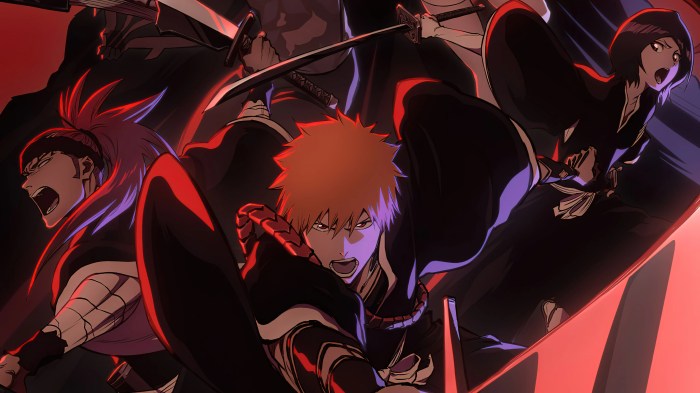
The visual and audio elements of Bleach: Thousand-Year Blood War Season 3 play a crucial role in enhancing the epic scale and emotional impact of the narrative. From the intricate animation to the powerful soundtrack, every element works together to create a captivating and immersive experience for the viewers.
Animation Quality and Style
The animation quality of Season 3 surpasses its predecessors, showcasing a significant leap in detail, fluidity, and visual storytelling. The studio, Pierrot, has implemented advanced techniques to deliver stunning visuals, bringing the characters, environments, and action sequences to life with unprecedented realism.
The animation style maintains the signature Bleach aesthetic while incorporating elements of realism and expressiveness, particularly evident in the character designs and fight choreography.
Soundtrack
The soundtrack of Season 3 is a powerful blend of orchestral scores, electronic music, and traditional Japanese instruments. The music seamlessly integrates with the narrative, amplifying the intensity of battles, underscoring the emotional moments, and establishing the overall atmosphere of the story.
The soundtrack’s use of traditional Japanese instruments, such as the shakuhachi and taiko drums, adds a distinct cultural flavor and enhances the mystical and spiritual elements of the story. The use of electronic music, especially during action sequences, adds a layer of intensity and energy, highlighting the fast-paced and dynamic nature of the battles.
Do not forget click ghost’s face to obtain more thorough aspects of the ghost’s face topic.
The orchestral scores, with their grand and sweeping melodies, effectively convey the epic scale of the conflict and the emotional weight of the characters’ struggles.
Special Effects and CGI
The use of special effects and CGI in Season 3 is particularly noteworthy, contributing significantly to the visual spectacle of the battles. The effects are seamlessly integrated with the hand-drawn animation, enhancing the realism and impact of the fight sequences.
The CGI is used effectively to create impressive visual effects, such as energy blasts, Zanpakuto transformations, and the creation of vast battlefields. The use of CGI allows for greater flexibility and detail in depicting the supernatural abilities of the characters, particularly the complex techniques and transformations of the Quincy.
The result is a visually stunning and immersive experience that enhances the impact of the story.
Fan Reactions and Critical Reception
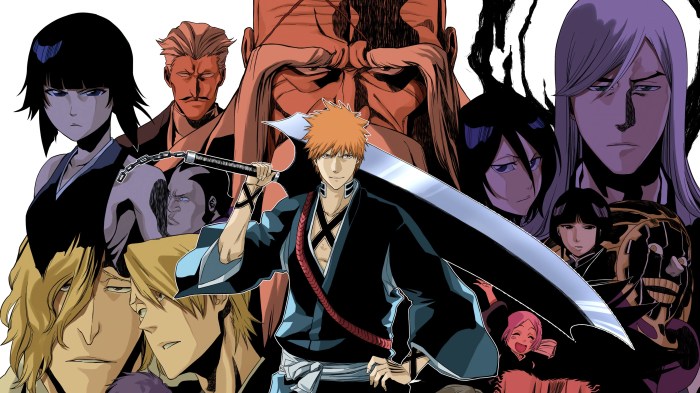
Bleach: Thousand-Year Blood War Season 3 has sparked a flurry of discussion and debate among fans and critics alike. The final arc of the anime adaptation has been eagerly anticipated for years, and its arrival has generated a wide range of reactions.
Fan Reactions
The fan reaction to Season 3 has been overwhelmingly positive, with many praising the anime’s stunning visuals, intense action sequences, and faithful adaptation of the source material. The season has also been praised for its emotional depth and character development, particularly in its exploration of the complex relationship between Ichigo and his comrades.
The release of the final arc has reignited a passion for the Bleach franchise, leading to increased fan engagement across social media platforms. Discussions surrounding the anime’s plot twists, character motivations, and the overall quality of the adaptation have dominated online communities.
Many fans have expressed their appreciation for the anime’s ability to capture the essence of the manga while also adding its own unique flourishes.
Critical Reception
Anime reviewers and critics have generally been impressed by Season 3, praising its technical excellence and its ability to capture the spirit of the source material. The anime’s animation, sound design, and soundtrack have been particularly lauded. Critics have also highlighted the season’s strong character development, particularly in its portrayal of Ichigo and his inner struggles.
Several critics have noted the anime’s ability to balance intense action with moments of emotional depth and introspection, creating a compelling and engaging narrative.
Discover more about the working of champions dota 2 in the field.
Comparative Analysis of Fan and Critical Reception
While both fans and critics have largely praised Season 3, there are some notable differences in their perspectives. Fans tend to focus more on the anime’s emotional impact and its faithfulness to the source material. They are often more invested in the characters and their relationships, and they are more likely to be moved by the anime’s dramatic moments.Critics, on the other hand, often take a more analytical approach, focusing on the anime’s technical aspects and its artistic merit.
They are more likely to appreciate the anime’s animation, sound design, and storytelling techniques.Overall, the critical reception of Bleach: Thousand-Year Blood War Season 3 has been highly positive, with both fans and critics praising its technical excellence, emotional depth, and faithful adaptation of the source material.
The anime has successfully captured the spirit of the manga while also adding its own unique flourishes, creating a truly memorable and impactful experience.
Season 3’s Impact on the Bleach Franchise: Bleach Thousand Year Blood War Season 3
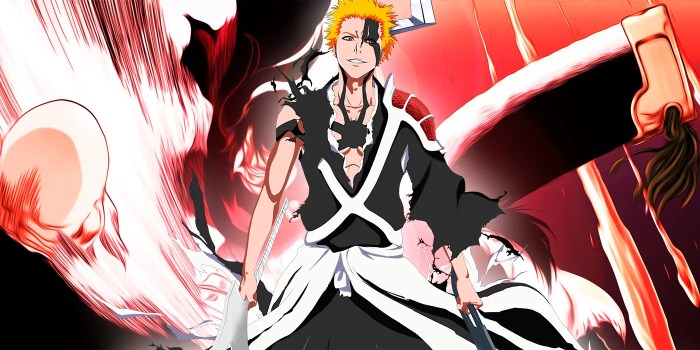
Bleach: Thousand-Year Blood War Season 3, the final arc of the anime, is not just a culmination of years of storytelling but a significant milestone in the Bleach franchise’s history. This season significantly impacts the overall narrative, lore, and legacy of the series, leaving an enduring mark on its fandom.
The Season’s Contribution to the Bleach Narrative and Lore
Season 3 delves deep into the origins of the Soul Society, the Quincy, and the ancient conflict between them. The season provides crucial backstory for characters like Yhwach and the Sternritter, adding depth and complexity to their motivations. This exploration of the past directly impacts the present, revealing the true nature of the Soul King and the intricate web of events that led to the current war.
The season also introduces new concepts, such as the power of the Soul King’s spirit and the potential for Quincy and Soul Reaper powers to merge, further enriching the Bleach universe.
Potential Implications for Future Installments
While the Thousand-Year Blood War arc concludes in Season 3, the events of the season open up possibilities for future installments. The fate of the Soul Society, the Quincy, and the newly revealed powers and abilities leave room for new stories and explorations.
The introduction of the Soul King’s spirit as a potential source of power could lead to new conflicts or alliances, while the lingering presence of Quincy remnants in the world of the living suggests further potential for interactions between the two realms.
Season 3’s Impact on the Popularity and Legacy of the Bleach Series
Season 3 has reignited interest in the Bleach franchise, attracting both old and new fans. The high-quality animation, intense action sequences, and emotional depth of the final arc have been praised by critics and viewers alike. The season’s success has contributed to a surge in merchandise sales, fan art, and discussions, demonstrating the enduring appeal of the Bleach universe.
The final arc’s impact on the series’ legacy is undeniable, solidifying Bleach’s place as a cornerstone of the shonen genre and a beloved anime franchise.
Bleach Thousand-Year Blood War Season 3 is a testament to the enduring power of the Bleach franchise. It delivers a captivating blend of action, drama, and emotional depth, leaving fans eager to see how the final chapter of this epic saga unfolds.
With its compelling characters, intricate storyline, and stunning visuals, Season 3 is sure to be a memorable addition to the Bleach canon.
Clarifying Questions
Will there be more seasons of Bleach after Season 3?
While there is no official confirmation yet, the Thousand-Year Blood War arc is expected to conclude with Season 3. However, the possibility of future seasons or spin-offs remains open.
What are the major plot points of Season 3?
Season 3 focuses on the final confrontation between Ichigo and Yhwach, the Quincy King, as well as the fate of the Soul Society and the Quincy. The season also delves into the past of key characters, revealing their motivations and shaping the course of the present.
Is Season 3 worth watching if I haven’t seen the previous seasons?
While Season 3 is a direct continuation of the previous seasons, it is recommended to watch them first for a complete understanding of the story, characters, and lore.
